


For individuals with impaired voluntary movement caused by nerve damage, there is often a damaged neural pathway separating the ability to express a movement intention and the physical execution of that movement.
One application approach for brain-computer interfaces is to decode brain signals associated with motor intent and convert them into commands executable by external devices or stimulation systems. In this way, researchers are exploring ways to bypass damaged pathways and re-establish the connection between intention and action.
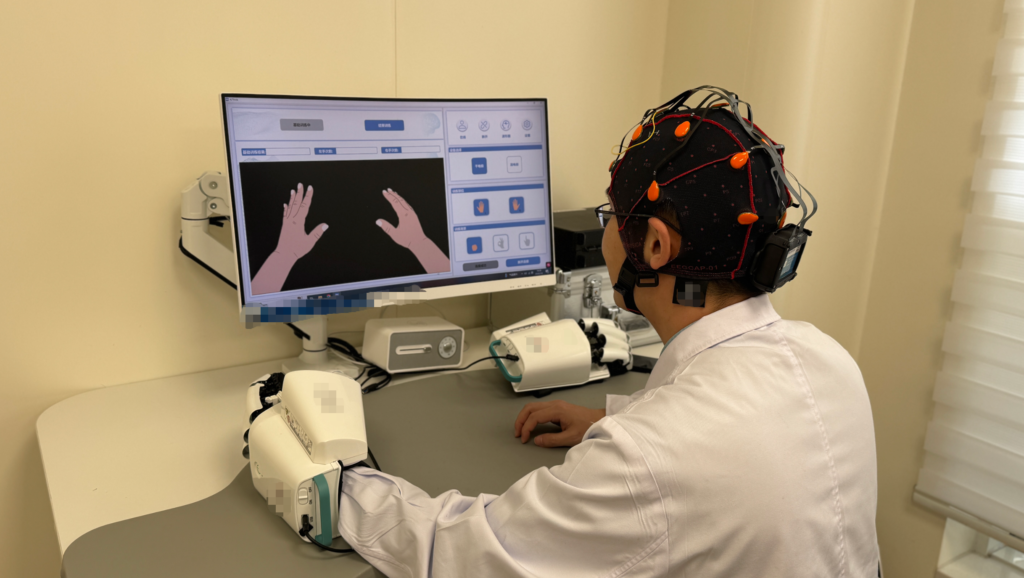
*Source: Xinhuanet
In the morning, the special session focused on the industrial development of brain-computer interfaces, co-hosted by Hongqiao Tech Week and Shanghai Minerva Medical Technology Co., Ltd., will centre on functional recovery.
Li Xiaojian, Founder and Chief Engineer of Shenzhen NeuroX Medical, will deliver the presentation From “Brain Wheelchair” to “Neural Repairer”: Alternative Possibilities for Brain-Computer Interfaces, exploring technological applications beyond functional compensation.

Are long-term implanted electrodes safe? Can signals remain stable? Can patients use the device in daily life? These questions directly shape product design and clinical validation for brain-computer interfaces. FDA guidance documents for implanted BCIs also lay out recommendations covering biocompatibility, sterility, electrical safety and clinical study design.
Professor Wang Shouyan, Director of the Center for Neuromodulation and Brain-Computer Interface Research at Fudan University, has long been conducting research on neuromodulation, neural information processing and medical device development driven by clinical needs. He will present The Middle Ground of Brain‑Computer Interfaces: Why a Gap Lies Between “Building the Technology” and “Bringing It to Market”. Wei Xufeng, Chairman and Chief Scientist of Jiangsu Med-Fly, will share Brain‑Computer Interfaces: Safety Evaluation and Translation from Animal Studies to Human Use, advancing the discussion on bridging preclinical assessment and human application.
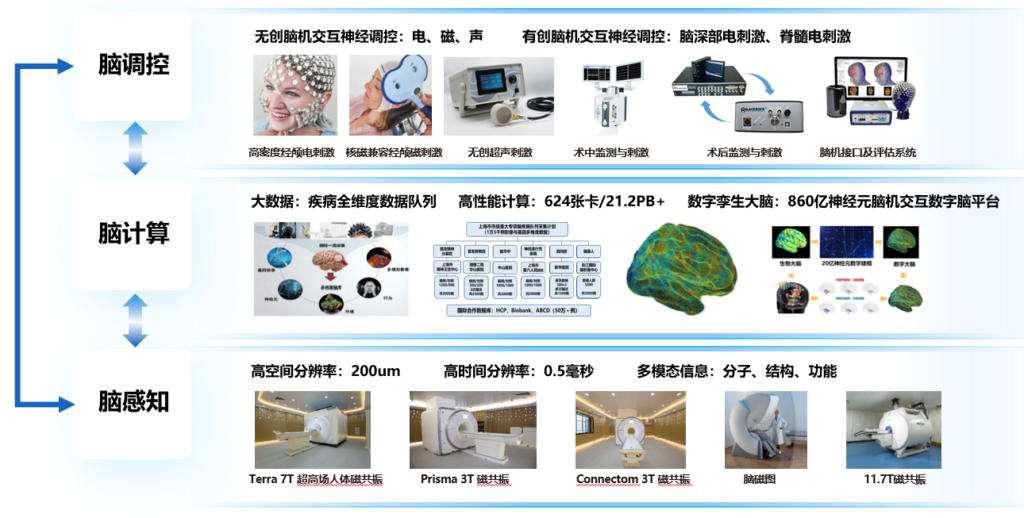
*Source: Institute of Science and Technology for Brain-Inspired Intelligence, Fudan University
Following that, Xu Rui, CEO of Shanghai Minerva Medical Technology Co., Ltd., will moderate a forward-looking panel discussion on BCI technological innovation and applications, joined by Li Xiaojian and Wang Shouyan to exchange views on technical and practical challenges.
By bringing together device R&D, clinical requirements and safety assessment, the session offers a holistic view of the hurdles that must be overcome for the industrialisation of brain-computer interfaces.

AI can support target identification, molecular generation and compound screening. Yet for R&D teams, more critical questions remain: which experimental trials can it reduce, and does it balance efficacy, toxicity and in vivo performance?
In the afternoon, the Life Sciences & Healthcare Stage will kick off with sessions on the current landscape and future of drug discovery in the AI era.
Wang Jingye, China Business Lead at L.E.K. Consulting, will deliver the talk Blueprint for AI-Driven Drug Discovery. Covering model capabilities, corporate investment and R&D collaboration, his presentation will explore how AI can deliver sustained practical value. Don’t miss this incisive on-site sharing!

Allosteric drugs modulate protein function by binding to sites distinct from conventional active sites on the protein. The crux lies in identifying suitable sites and designing potent molecules.
The ED2Mol study published in 2025 yielded active compounds including allosteric inhibitors and activators via computational design and experimental validation.
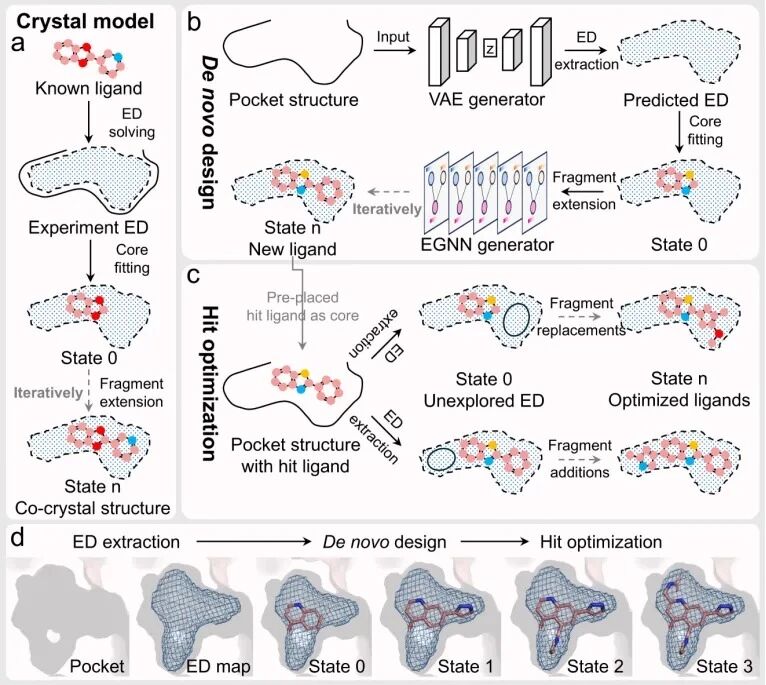
*ED2Mol Model Framework and Workflow
Shi Leilei, Vice President and Head of the AI Platform at Nutshell Therapeutics, will present AI-Powered Allosteric Drug Discovery: Tackling Undruggable Targets, introducing R&D approaches that combine artificial intelligence with allosteric mechanisms.
Li Xiaoran, Co-founder and CEO of AITrobiotech, will deliver AI + Quantum Computing: The Swiss Army Knife for Hunting the Next Billion-Dollar GLP Target. At which stages can these novel computational tools deliver verifiable support? This session is not to be missed!

For nucleic acid therapeutics, beyond sequence design, their ability to reach target tissues and enter cells also determines therapeutic outcomes. The delivery performance of lipid nanoparticles (LNPs) depends on their composition and formulation ratio, calling for continuous optimisation of carriers and formulations.
AI is now being applied to this stage as well. A 2025 study in Nature Nanotechnology used Transformer models to predict LNP delivery performance, with candidate formulations validated through cell and animal experiments, laying a foundation to cut trial-and-error in screening.
Zhu Yuchao, General Manager of Hanxin Biotech, will present AI + Lipid Nanoparticle (LNP) Technological Breakthroughs and Applications in Anti-Ageing. Challenges remain across delivery efficiency, targeting accuracy and scalable manufacturing.
Once an abnormality is detected, interpretation, re-examination and follow-up determine whether screening delivers real value. Gao Jianxiong, Vice President of Technology at Aikang Group, will share Health Agents: From Precision Screening to Precision Management, discussing the linkage between risk identification and downstream services.
Clinical studies have shown that the value of AI must be evaluated within real workflows. For health management, it is critical to track completion of follow-up checks, risk intervention and sustained user engagement. Service handover after algorithm-based detection constitutes another practical priority.

Ma Wenxi, Quality & Compliance Manager for Greater China at Carl Zeiss, will deliver the presentation Independent Topics for Medical AI: From “Lights-Out Production Lines” to Intelligent Clinical Care, extending the discussion to the autonomy, quality and compliance of medical AI.
Ranging from functional restoration and safety assessment for brain-computer interfaces, AI drug discovery and allosteric drug development, to LNP delivery, health agents and medical AI quality compliance, the opening-day agenda covers multiple links along the life science pipeline from R&D to real-world deployment. Clinical needs set the direction; algorithms and engineering provide the tools; experimental and clinical validation define the practical value of these technologies.
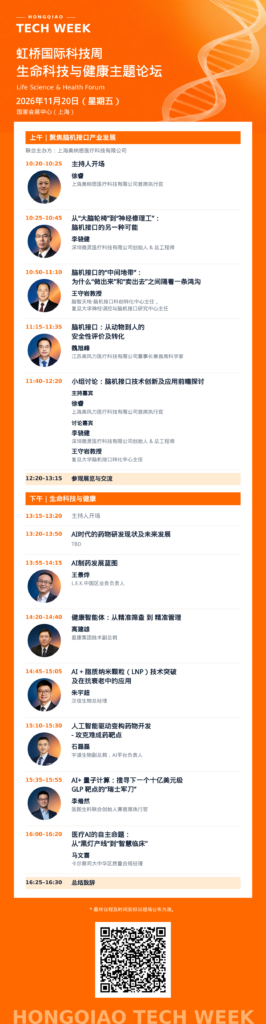
If you are sourcing R&D tools, evaluating clinical applications or advancing product translation, this session is well worth attending. Presentations from academia, industry and quality & compliance professionals will help you benchmark against real challenges, grasp technical progress and deployment requirements, and identify what needs validation and capacity building next.
On 20 November 2026, the Life Sciences & Healthcare Stage of Hongqiao Tech Week will take place at the National Exhibition and Convention Center (Shanghai). Register in advance and select the Conference Pass. Bring your questions on-site to explore viable pathways together with experts and industry peers.
Conference Pass Gain in-depth access to concurrent conferences, engage face-to-face with industry experts and stay ahead of cutting-edge trends.
CNY 1,088 Standard Rate
Benefits
Access to all exhibition halls and experience activities at Hongqiao Tech Week Admission to all parallel breakout sessions featuring presentations by world-class speakers (Global Leaders Summit excluded) Access to forum materials Entry to the Inspiration Lounge to start or join thematic discussions On-site one-on-one targeted business matchmaking service
Bring your colleagues along. Catch all six themed forums in one trip and bring cutting-edge insights back to your team! Group bookings for 3 or more attendees for the Conference Pass enjoy up to a 30% discount. Contact our corporate WeChat assistant, and we will provide one-stop registration support!