

When did the focus of competition in the AI industry shift away from models and applications toward underlying infrastructure such as computing power, electricity and energy storage? How voracious is AI’s appetite for power? Consider the following growth curves that give grid operators cause for serious concern.
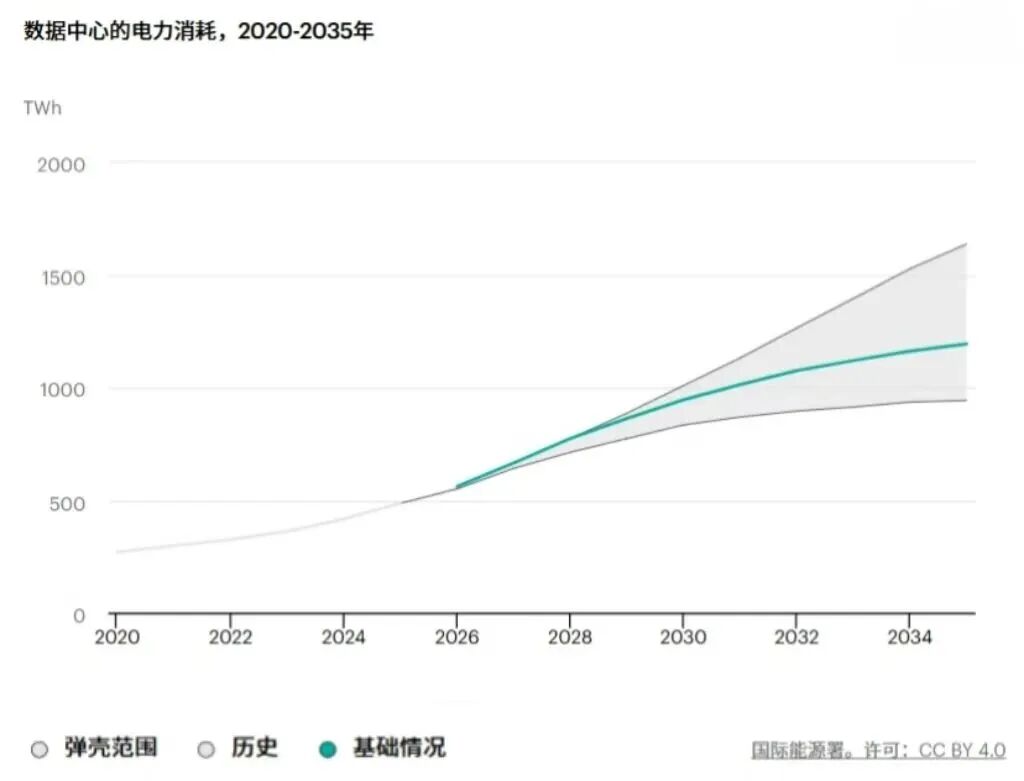
Source: IEA Official Website Report Page
Driven by the rapid expansion of large‑model training, AI inference and intelligent applications, the explosive surge in computing‑power demand is creating unprecedented pressure on power systems. Unlike traditional internet services, AI computing centers require not only continuous, large‑scale energy supply, but also millisecond‑level stable power supply to ensure the long‑term and efficient operation of GPU clusters.
At London Tech Week in June 2026 — part of Informa’s Global Tech Festival brand portfolio alongside Hongqiao Tech Week — large‑scale infrastructure investments centred on AI computing power were in full swing. UK Prime Minister Keir Starmer announced a national AI computing strategy worth approximately £1.1 billion, of which around £400 million will go directly to the procurement of advanced AI chips and the development of national‑scale computing capabilities.
AMD announced a £2 billion investment in the UK over the next five years to build high‑performance computing infrastructure in partnership with the University of Cambridge. AI cloud firm Nebius pledged roughly £1.7 billion to expand domestic AI infrastructure in the UK, targeting a compute capacity expansion to 65 MW by 2027. Concurrently, the City of London launched a £120 million AI support programme to help small‑ and medium‑sized enterprises accelerate AI adoption.
Over the three‑day London Tech Week event, publicly announced AI‑infrastructure‑related investments totalled more than £4.9 billion (equivalent to approximately RMB 47 billion). Almost all of this capital was channelled into chips, high‑performance computing, data centres and compute capacity, rather than consumer‑facing AI applications.
Market research firm Omdia projects that European IT spending will reach USD 1.3 trillion in 2026, representing an 8.2 % year‑on‑year increase. Data centres and AI infrastructure stand out as the fastest‑growing investment segments.
The rapid global expansion of the AI computing‑power industry serves as the core driving force behind the boom in the energy‑storage sector. In February this year, the share of supporting energy storage for domestic AI computing centres exceeded 40 %, surpassing energy storage paired with conventional new‑energy sources for the first time and ranking as the largest application scenario for energy storage.
Demand for energy storage is gradually shifting from being new‑energy‑driven to digital‑economy‑driven, with the AI industry emerging as a new engine fuelling energy‑storage growth.
Industry data further validates this trend. In the first half of 2026, China’s lithium‑ion battery output rose by 39.3 % year‑on‑year, while energy‑storage battery shipments grew by more than 80 % year‑on‑year.
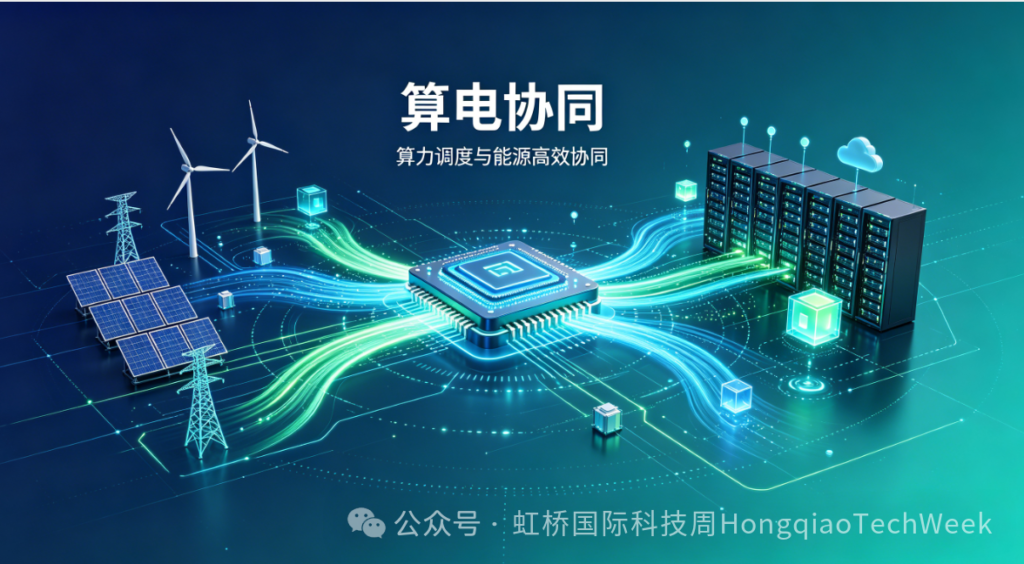
Furthermore in 2026, “computing‑power and power‑grid coordination” was included in the Government Work Report for the first time and incorporated into the Outline of the 15th Five‑Year Plan. The coordinated planning of computing power and power supply creates strong certainty for long‑term demand across the energy‑storage track.
*图片来源:分布式电源
National plans set a target for China’s new‑type energy‑storage installed capacity to reach 300 GW by 2030, doubling from roughly 136 GW recorded at the end of 2025. The energy‑storage industry will maintain rapid expansion, and closer synergies will take shape among AI computing centres, data centres, new‑energy bases and power‑grid systems in the future.
Meanwhile, the escalation of global energy‑security strategies continues to expand the energy‑storage market. High electricity prices, extreme weather and a rising share of renewable power generation in Europe have fuelled robust growth in residential, commercial‑and‑industrial, and grid‑scale energy storage. AI computing‑power demand and energy‑security demand are forming a genuine “dual‑wheel driving force”.
In the first half of 2026, China’s energy‑storage sector witnessed its most notable surge in demand in recent years. According to Soochow Securities, China’s installed lithium‑ion energy‑storage capacity will reach 253 GWh in 2026, a year‑on‑year increase of 44 %, and rise further to 354 GWh in 2027, representing roughly 40 % year‑on‑year growth.
Leveraging China’s established industrial strengths in artificial intelligence, new‑energy sources, battery manufacturing and energy‑storage technologies, Hongqiao International Tech Week, to be held this November, will carry forward themes from London Tech Week. It will feature thematic forums and industrial exhibitions focusing on cutting‑edge areas including AI computing power, energy storage and power‑system coordination. Upstream and downstream enterprises along the industrial chain, tech‑innovative firms and investment institutions are warmly invited to participate. The event aims to help global tech firms, energy enterprises and investment institutions identify partnership opportunities.
Hongqiao International Tech Week and London Tech Week share access to a global overseas enterprise database, international tech speakers, global science‑and‑technology innovation policymakers, as well as venture capital institutions. Accordingly, a large number of AI‑infrastructure enterprises, data‑centre operators, computing‑power service providers and international investment institutions that gathered at London Tech Week will also attend Hongqiao International Tech Week, opening doors for connections across global industrial resources.
Driven by the sustained growth in AI computing‑power demand, overseas markets are generating substantial procurement requirements for energy‑storage systems, energy solutions and supporting computing‑power infrastructure. More than just an efficient platform for exchanging emerging‑technology insights, Hongqiao International Tech Week will serve as a key cooperation hub linking global buyers, suppliers and industry partners.
*Portions of this article are sourced from DataBao, Yicai Global and New Digital Energy. None of the companies mentioned herein have any form of commercial cooperation, sponsorship, employment or other interest‑related affiliations with us. Images are sourced from the internet for reading‑aid purposes only and carry no commercial intent. Copyrights belong to their original authors. Should any infringement occur, right‑holders are welcome to contact us promptly and we will remove the relevant content immediately.
【About Hongqiao Tech Week】
Hongqiao Tech Week will host its inaugural edition from 20‑22 November 2026 at the National Exhibition and Convention Center (Shanghai). Under the theme Where Global Tech Ambition Meets Chinese Scale, it gathers global enterprises, visionary leaders, startups, investment institutions and cutting‑edge solution providers. Through the deep integration of conferences, exhibitions, cultural experiences and high‑level networking, the event seeks to forge transformative partnerships and identify key technologies set to redefine industries across Asia and the globe.